Tag Archives: swapletters

Ancient C64/Amiga Pirate Materials #2

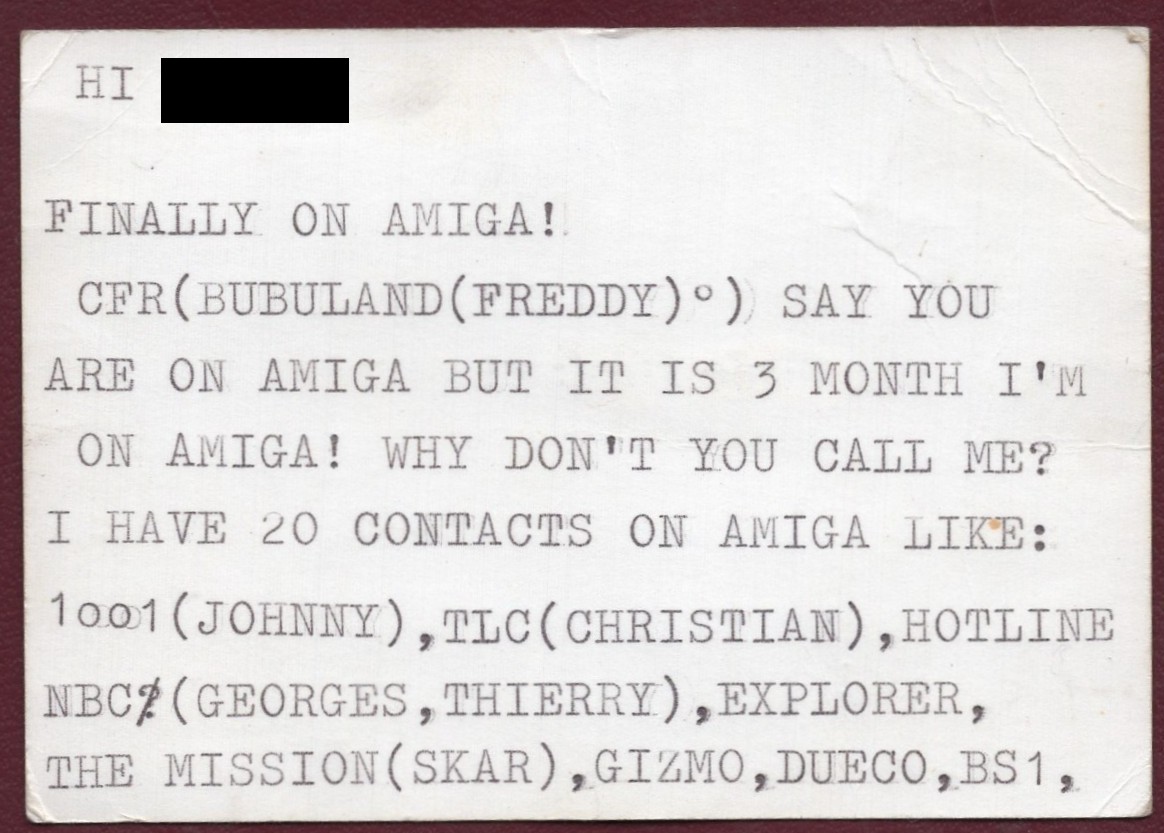
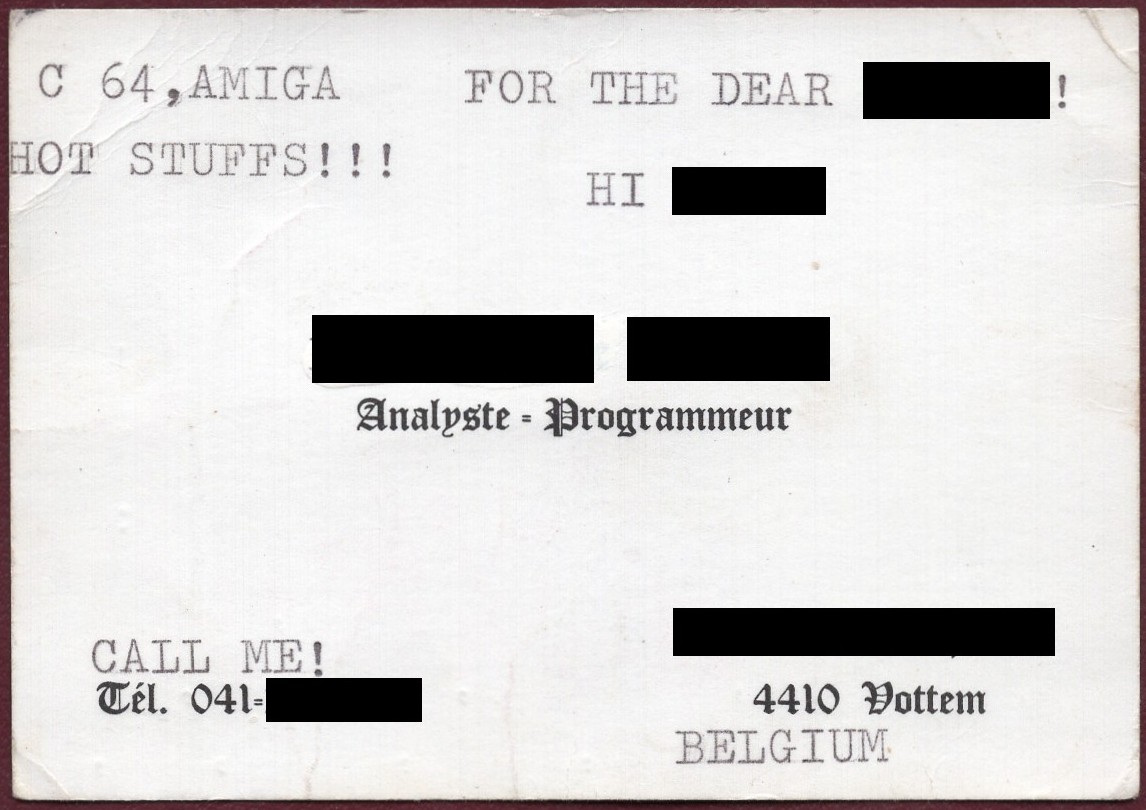
Here is the second batch of materials provided by an anonymous contributor (click here for the first instalment). Once again, you can browse through the paper relics of the very dawn of the home computer cracking & demo cultures – fragile traces of long forgotten individuals and groups as well as of those who came to be considered as scene legends later on. Among the more unusual scans from this update is the disk cover done by the early Amiga group Warfalcons. Even though Amiga floppy disks did not technicaly need paper sleeves, Warfalcons still made a batch of these – just like the usual ones on the C64, but in 3,5″ size.  Another remarkable artifact is a letter from a Belgian Amiga swapper around 1986 – typewritten on his father’s busines card. Another example of how much early digital subcultures had to rely on analogue techniques.

• Letter from CCC/Firesoft Inc. (Belgium) to undisclosed recepient, around 1986 [metadata]
Cleveland Distribution Service sticker, mid-1980s [metadata]
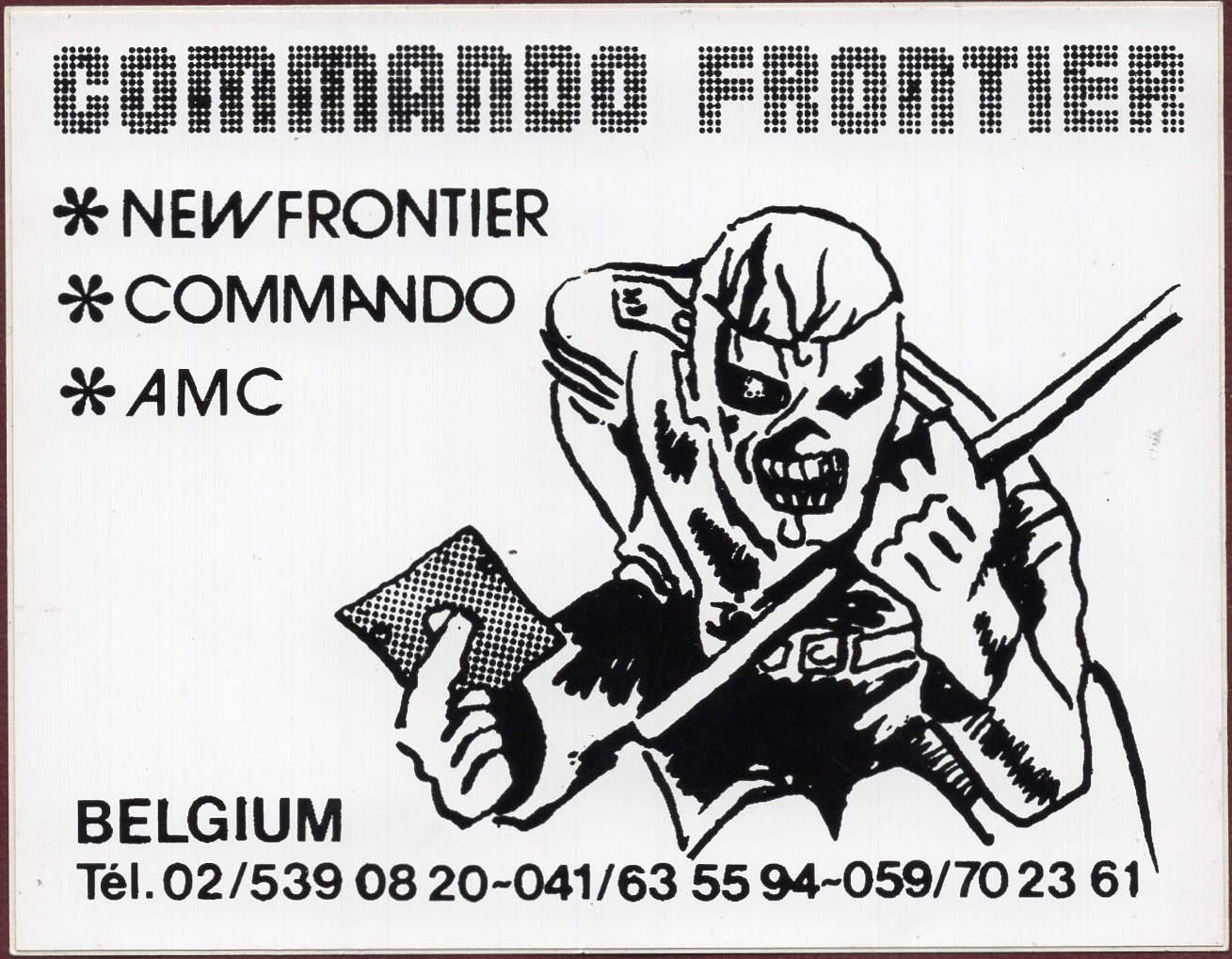
Commando Frontier sticker, between 1987 and 1989 [metadata]
Dominators business card, between 1986 and 1989 [metadata]
D.S. Compware sticker sheet, between 1986 and 1987 [metadata]
Italian Spreading Service sticker, mid-1980s [metadata]
Plutonium Crackers sticker sheet, around 1986 [metadata]
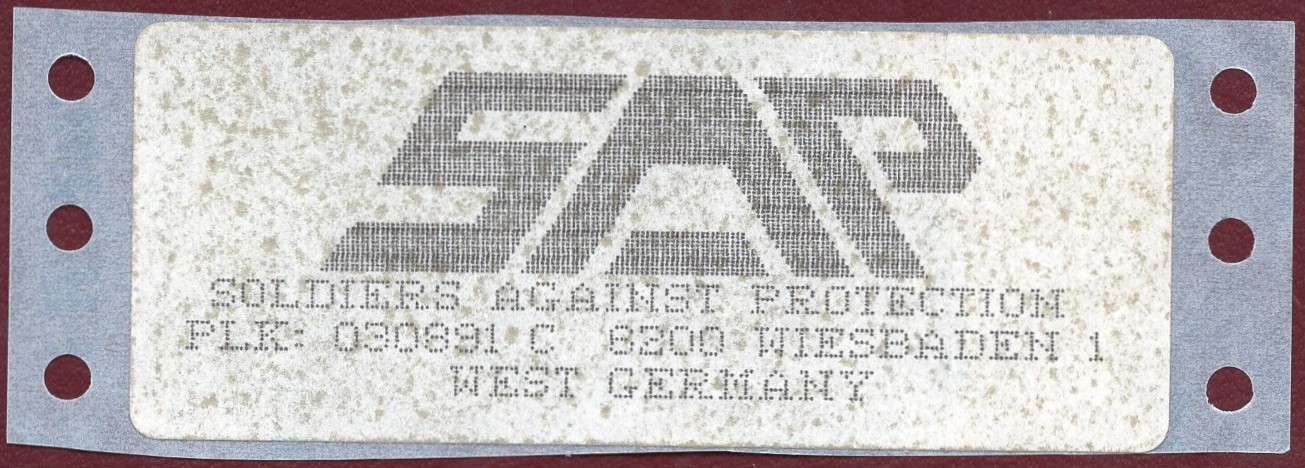
Soldiers Against Protection sticker, between 1986 and 1988 [metadata]
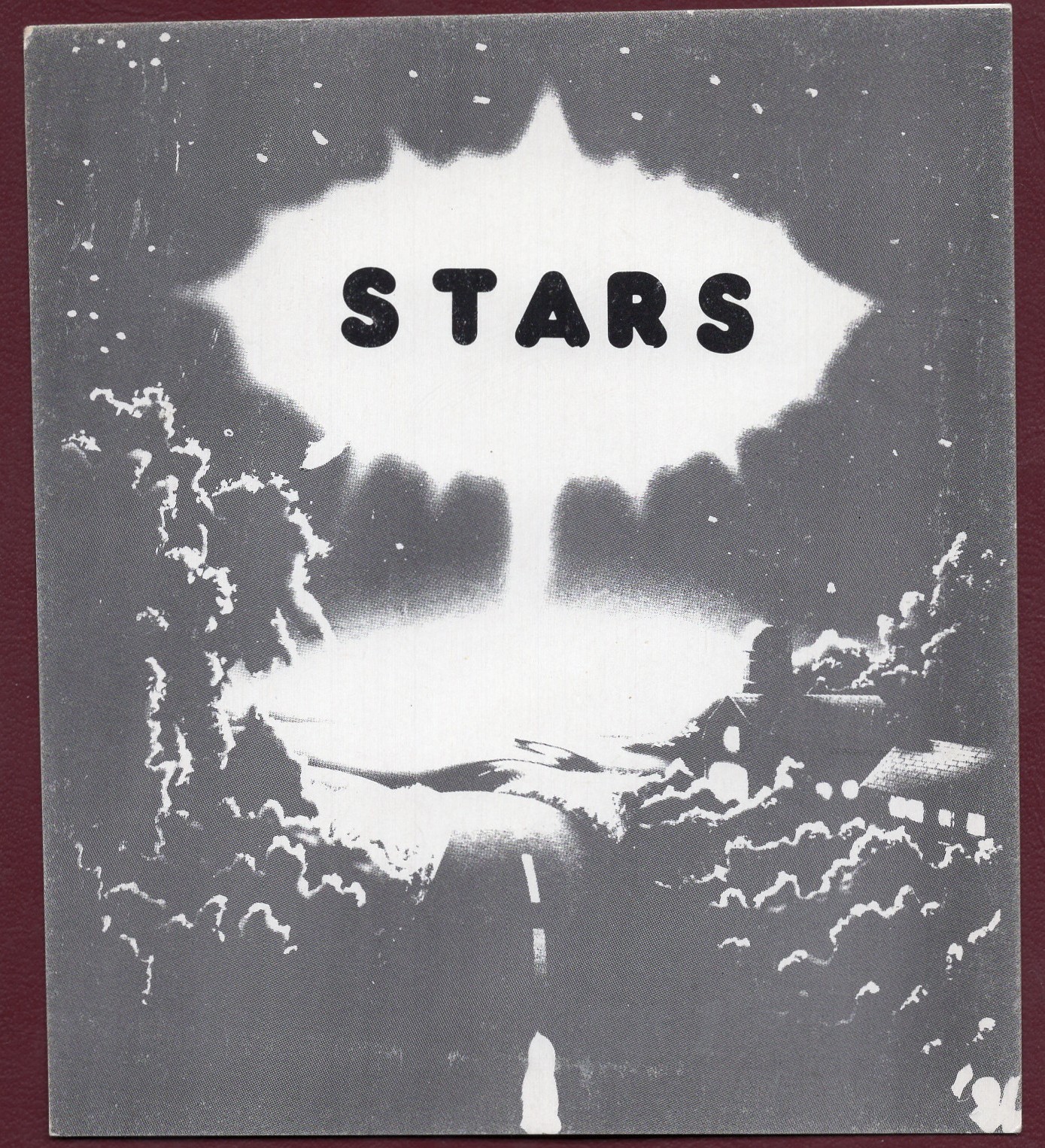
Stars promo card, 1986 [metadata]
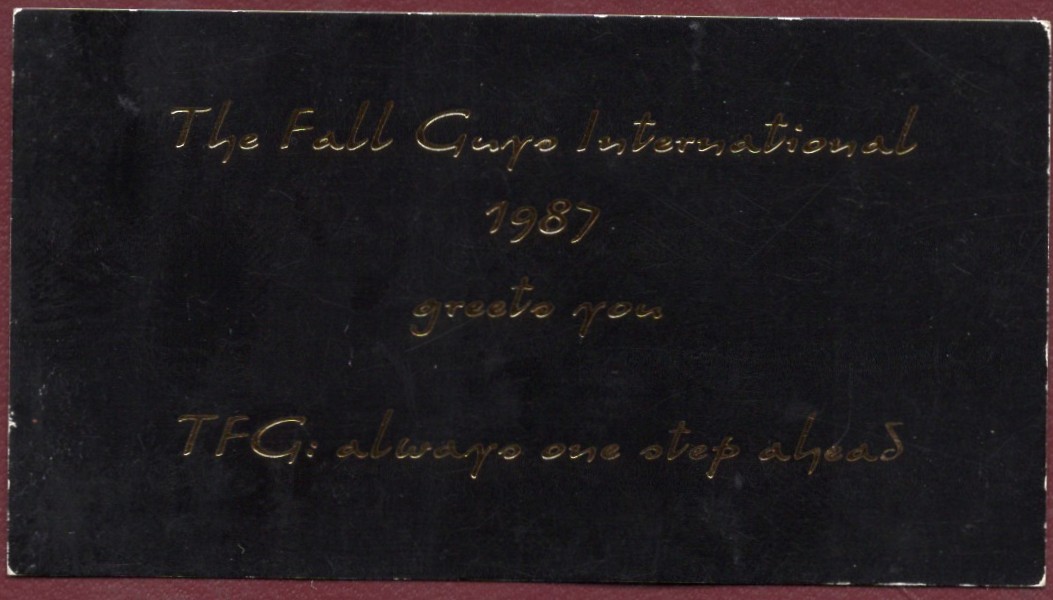
• The Fall Guys business card, 1987 [metadata]
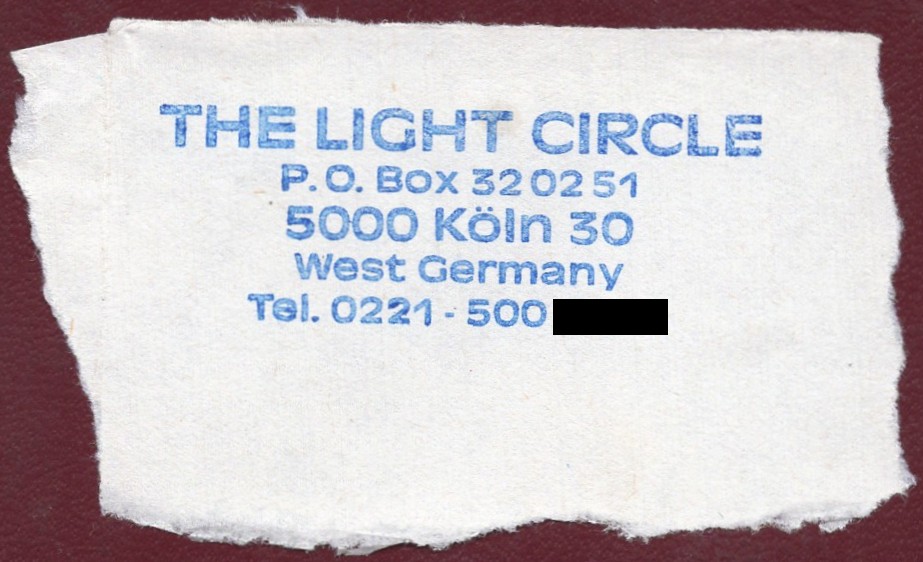
The Light Circle rubber stamp, between 1986 and 1988 [metadata]
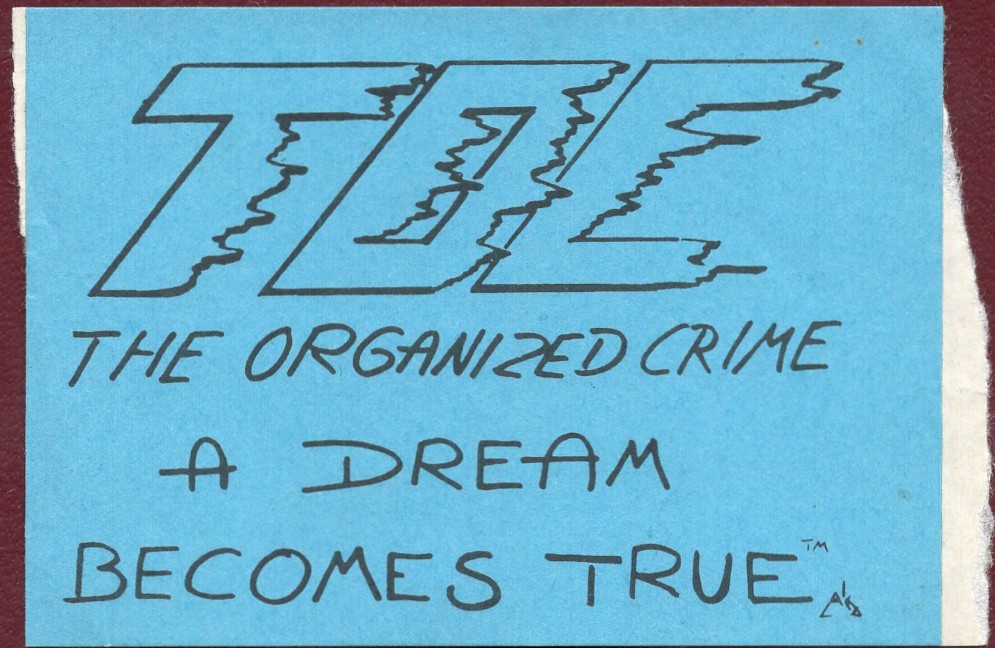
The Organized Crime sticker, between 1987 and 1988 [metadata]
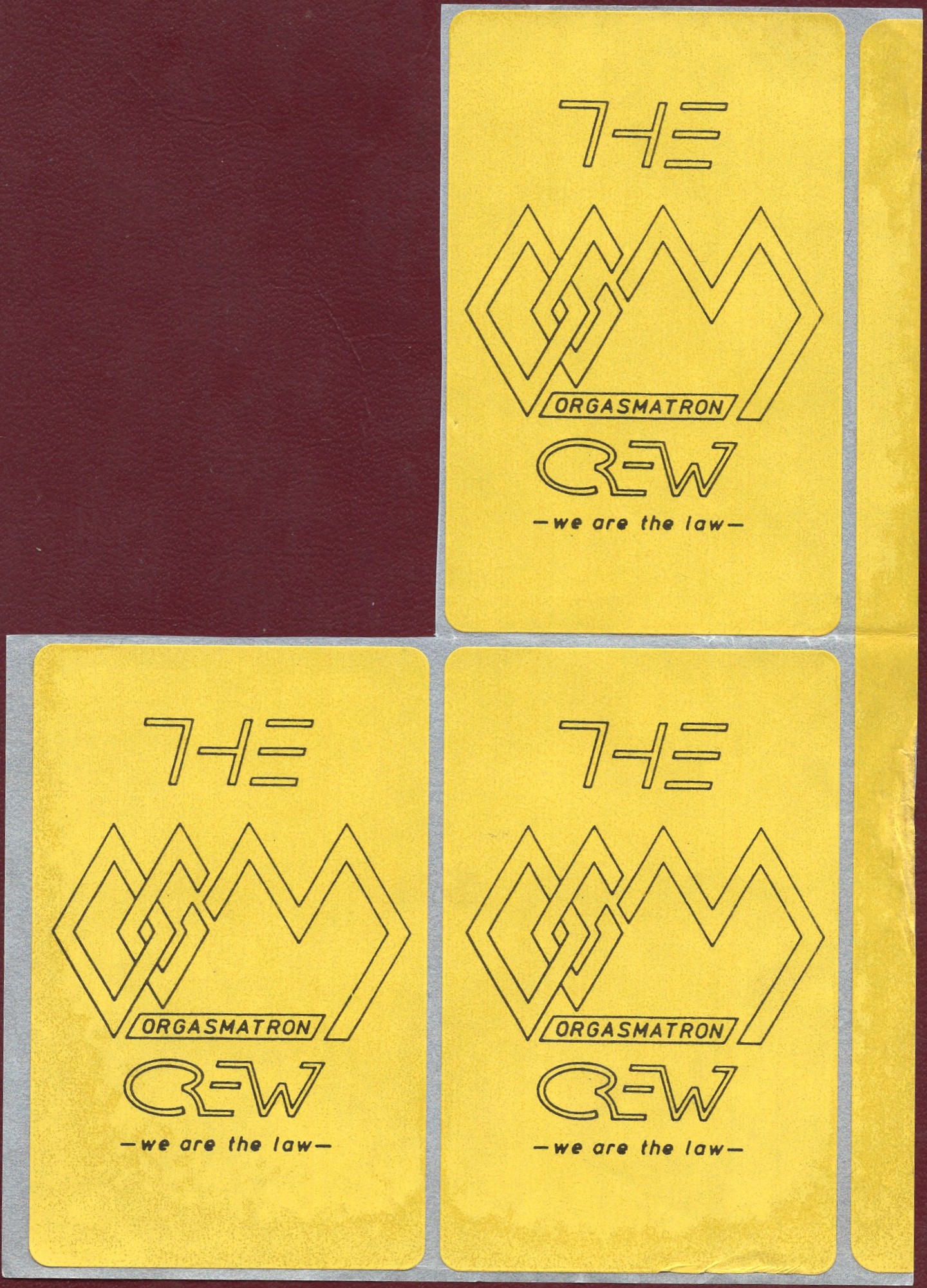
The Orgasmatron Crew sticker sheet, 1987 [metadata]
The Warriors 1881 sticker, between 1986 and 1988 [metadata]
The Wizards sticker, around 1987 [metadata]
• Unknown cartoon cutout, mid-1980s [metadata]
Warfalcons disk cover, around 1987-1988 [metadata]

C64 Swap Letters (Dr. Science Collection)

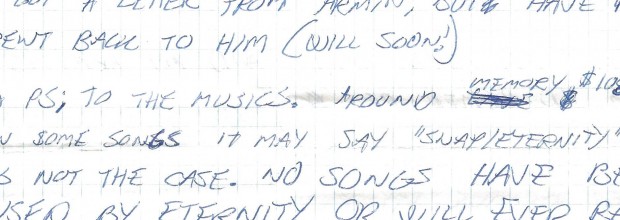
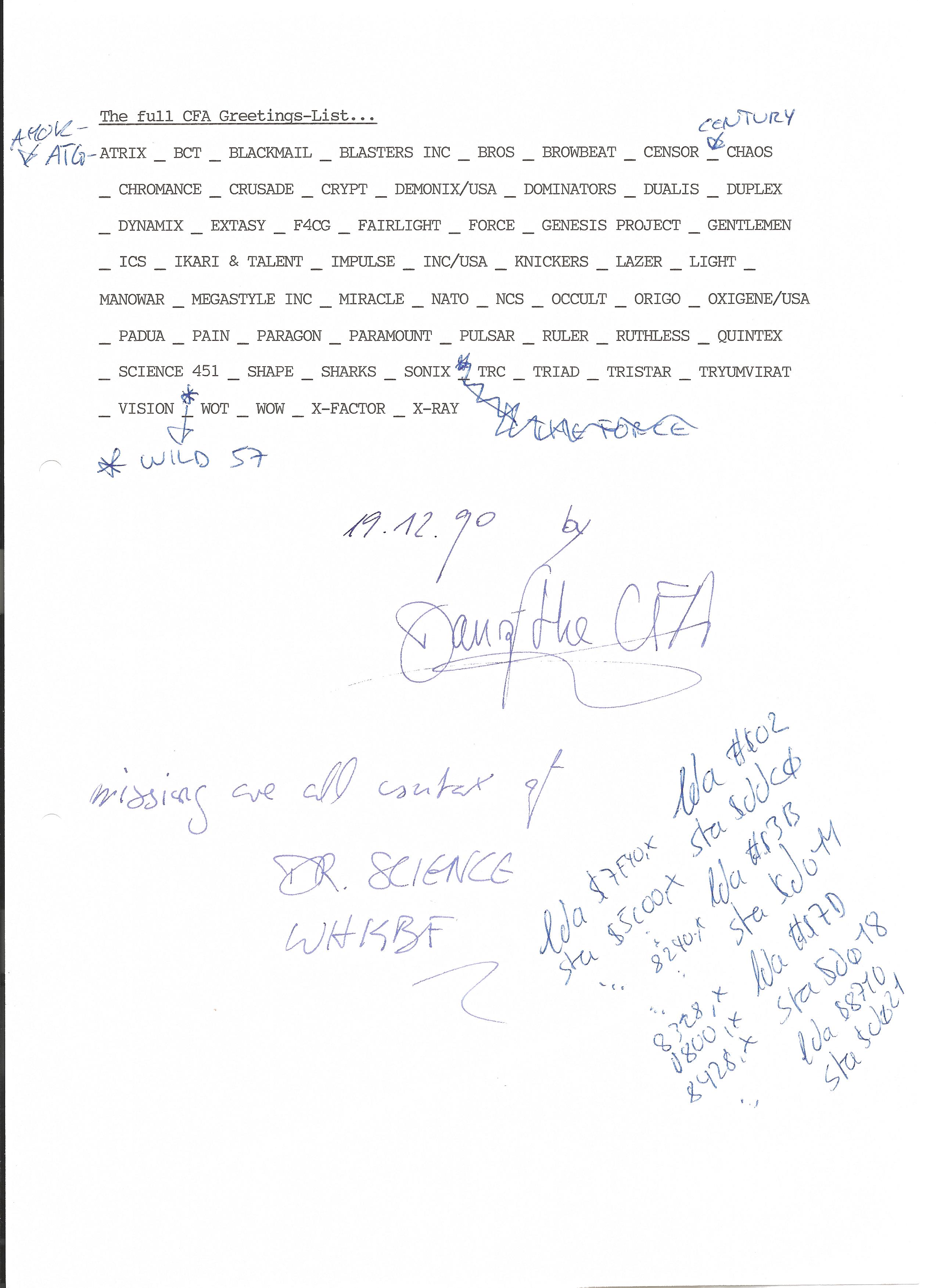
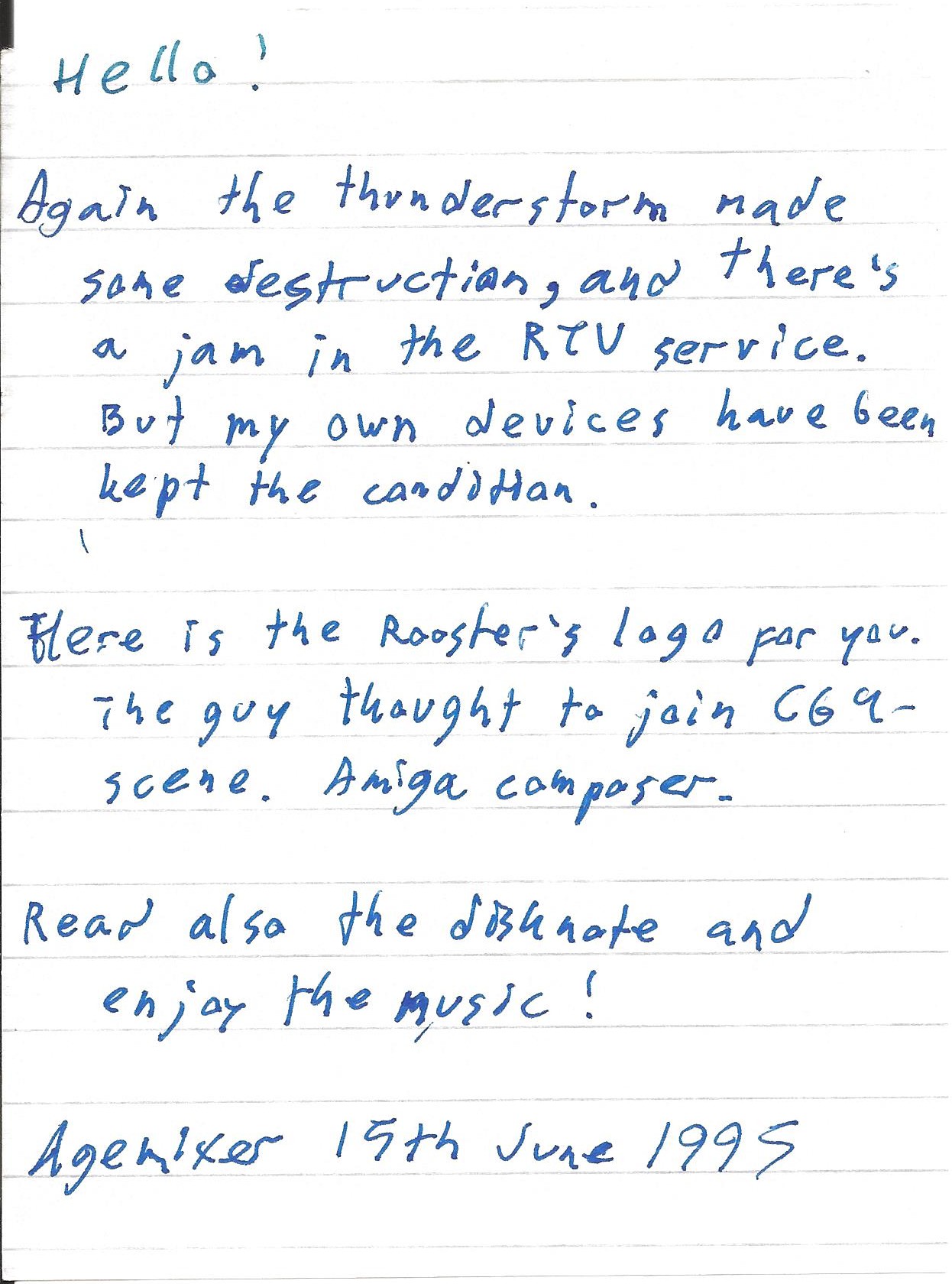
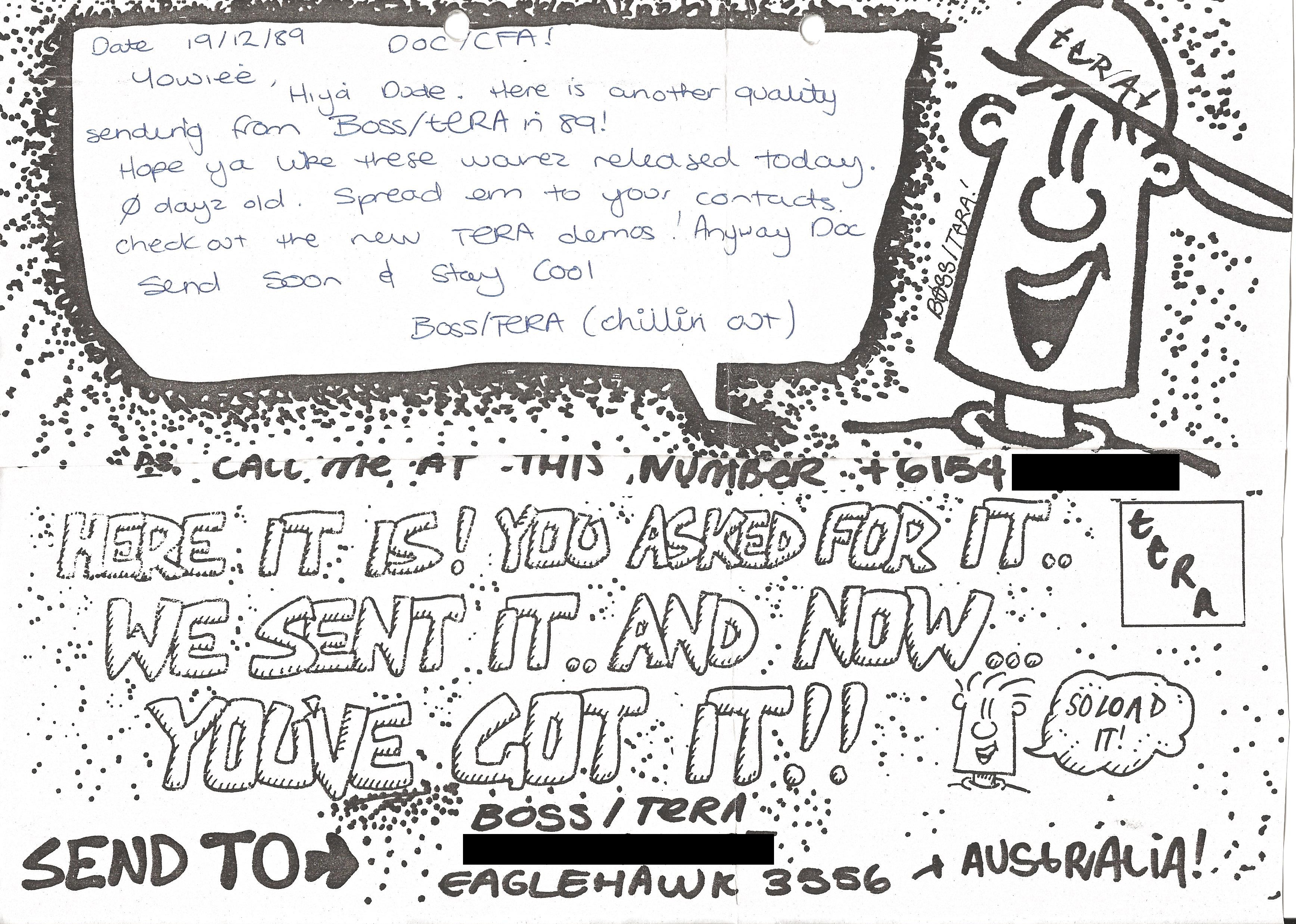
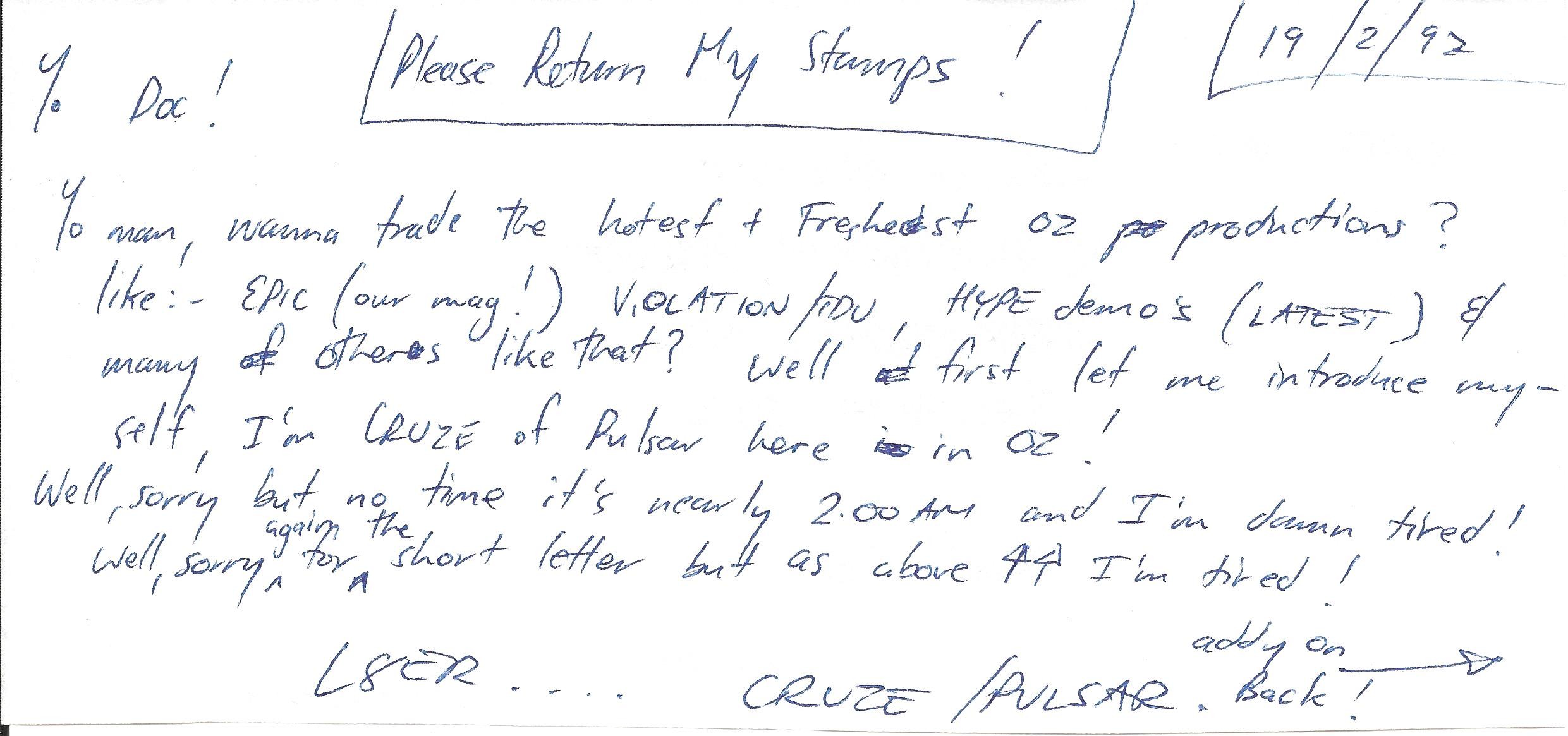
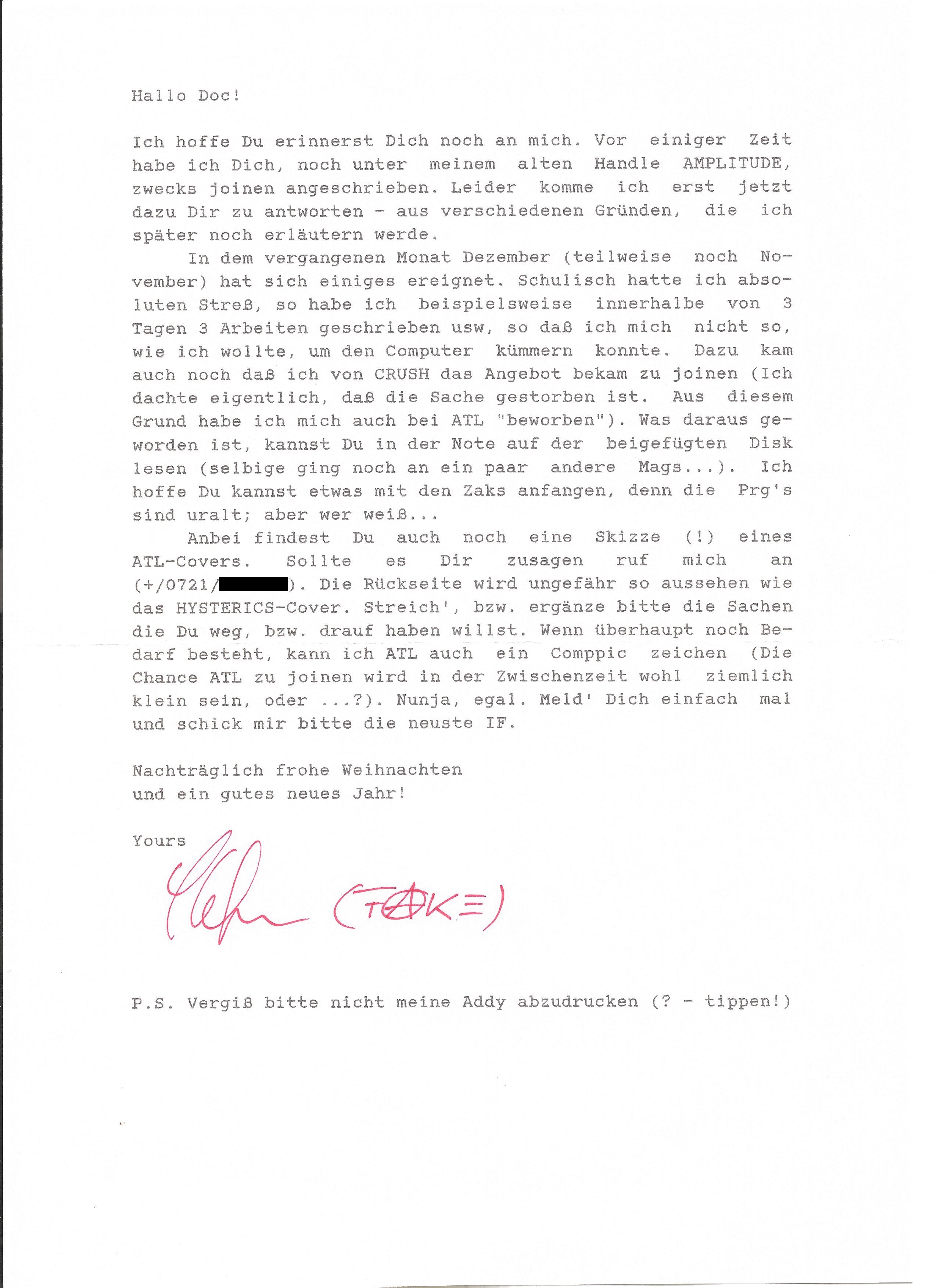
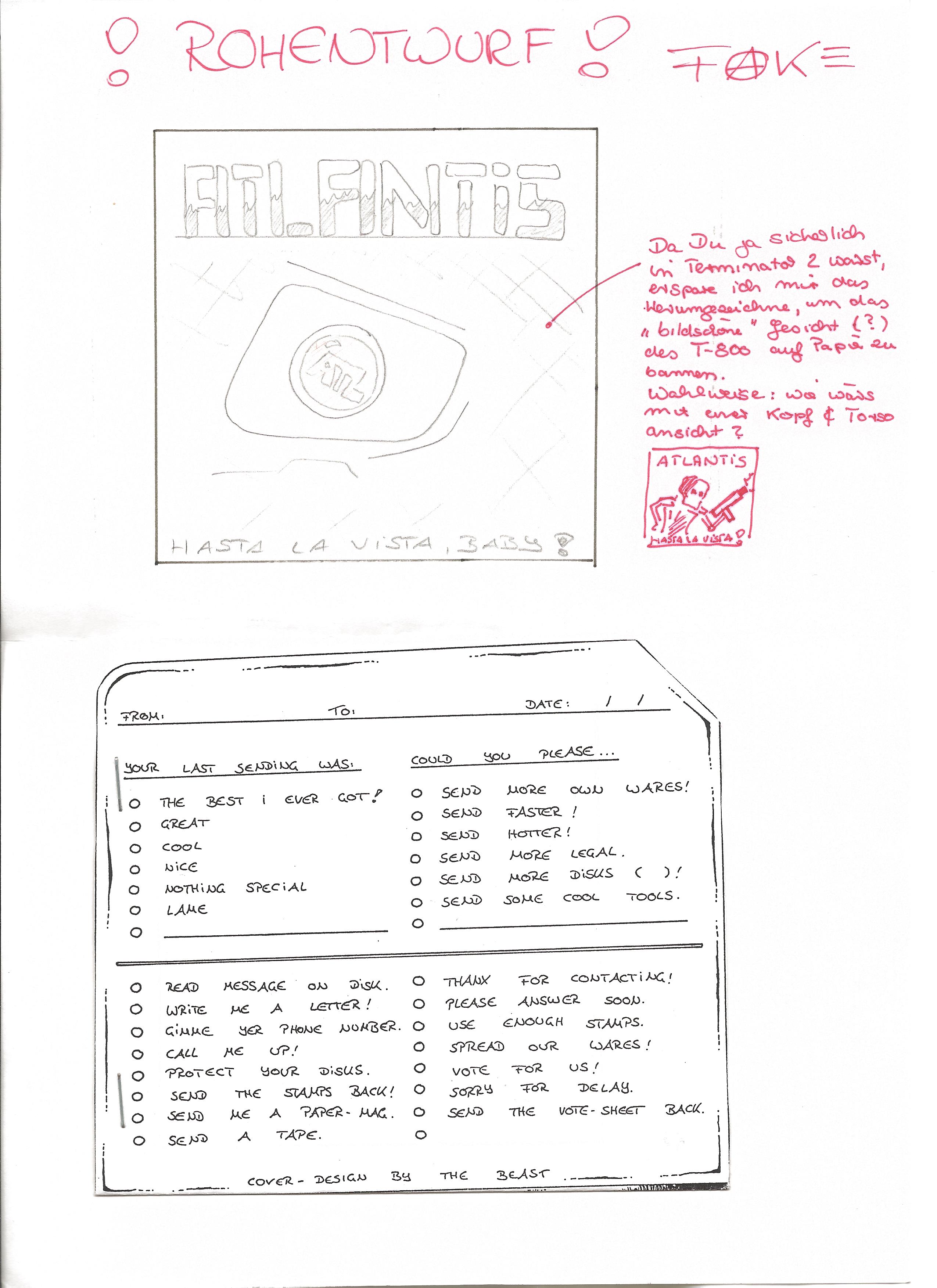
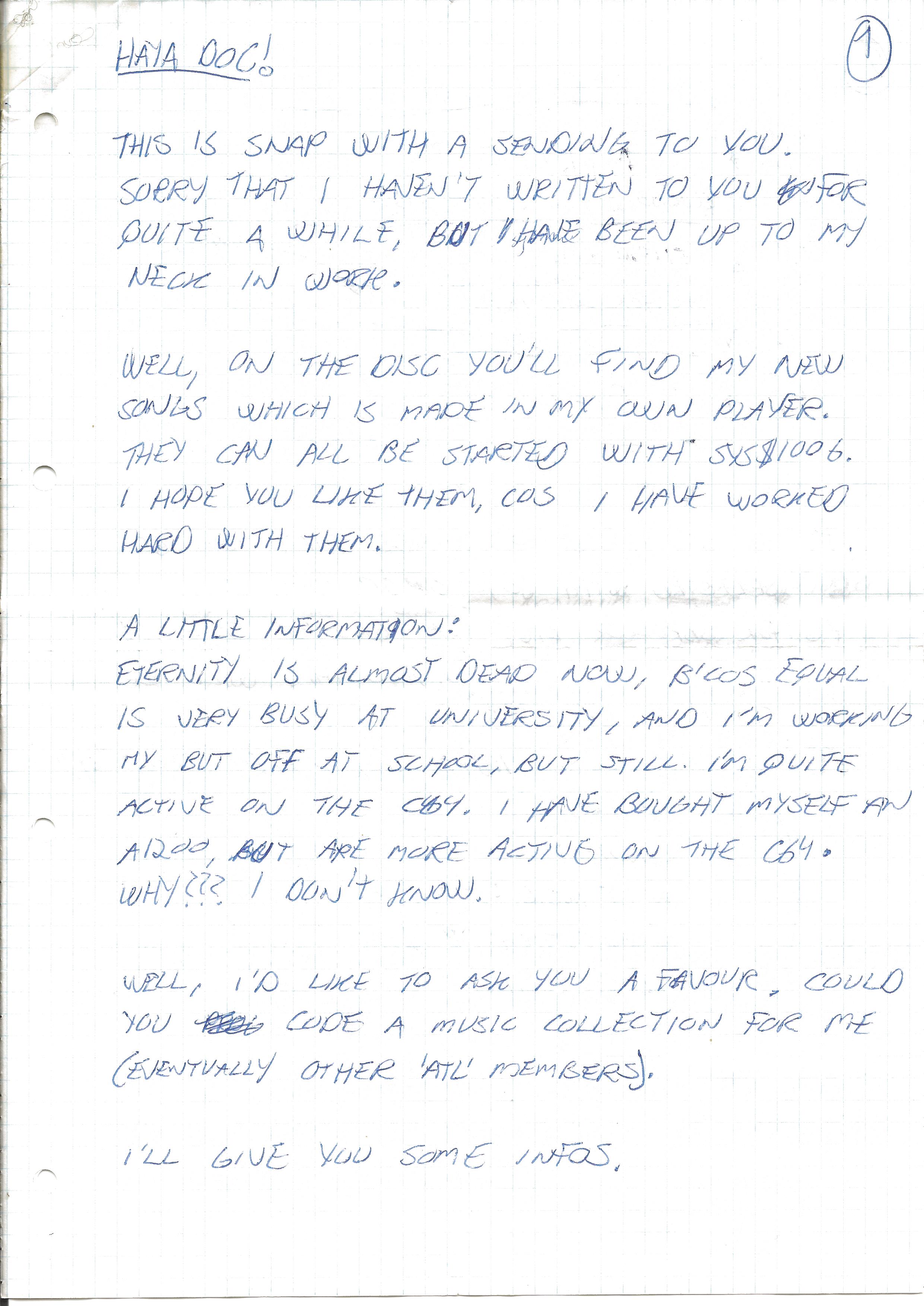
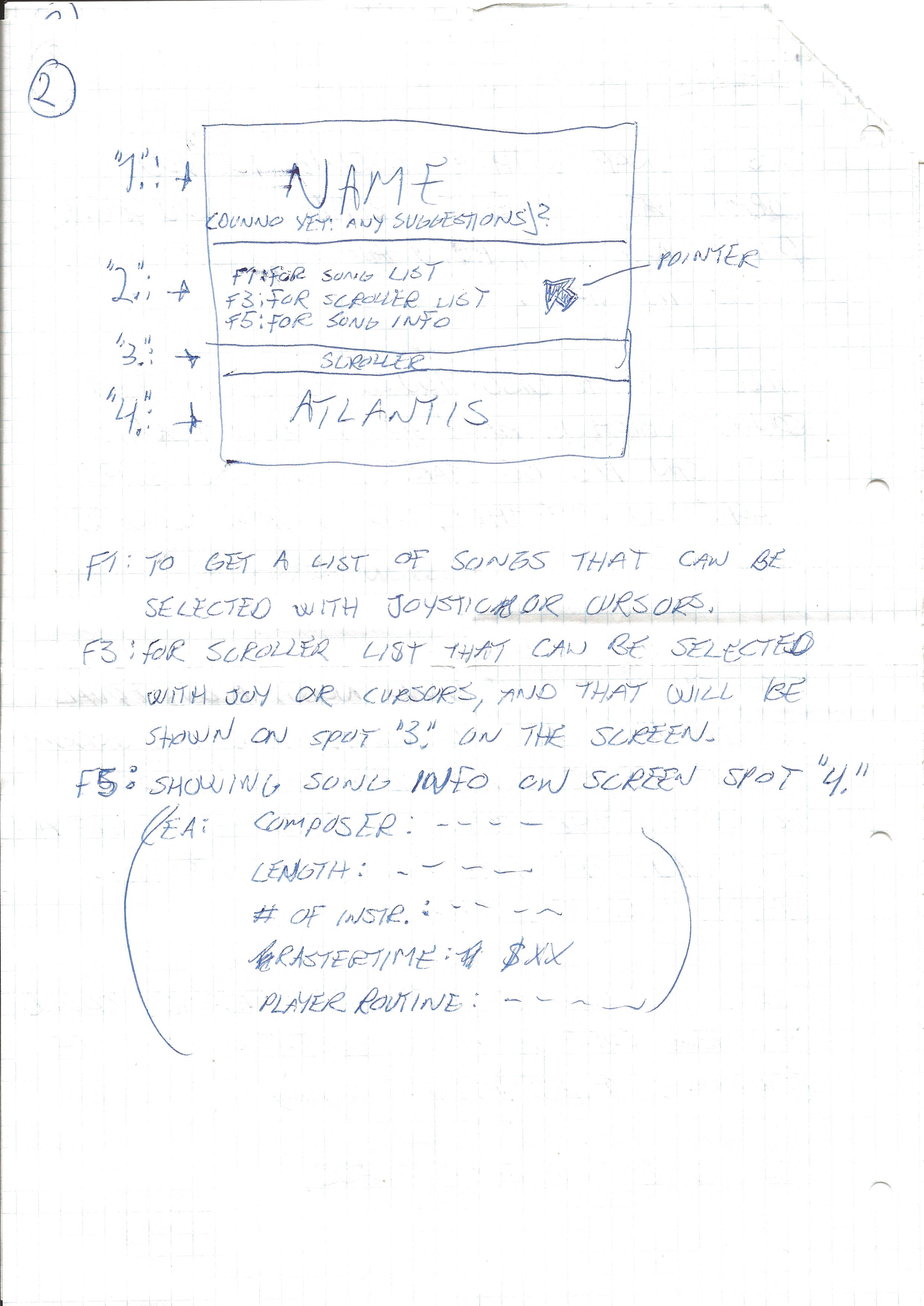
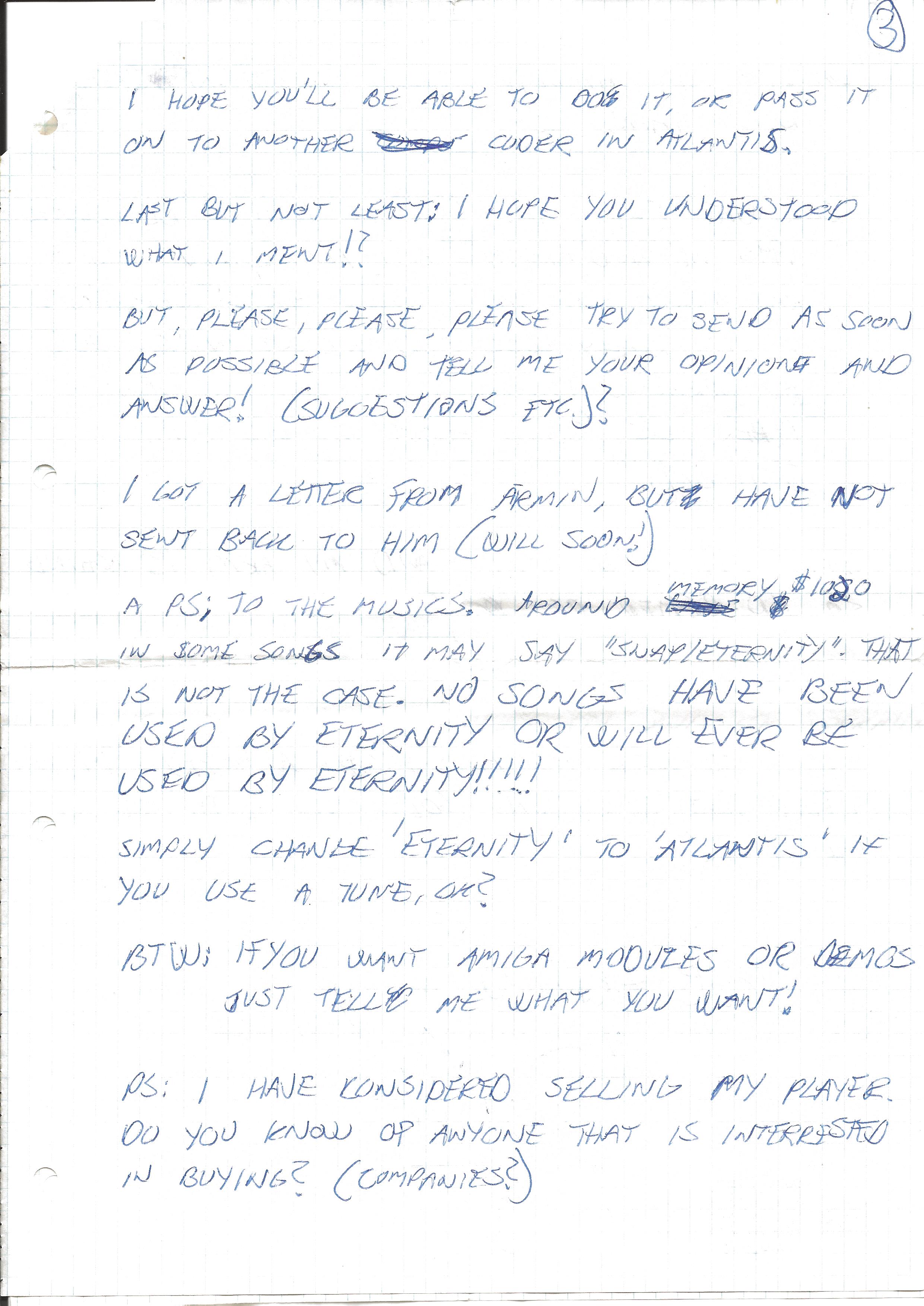
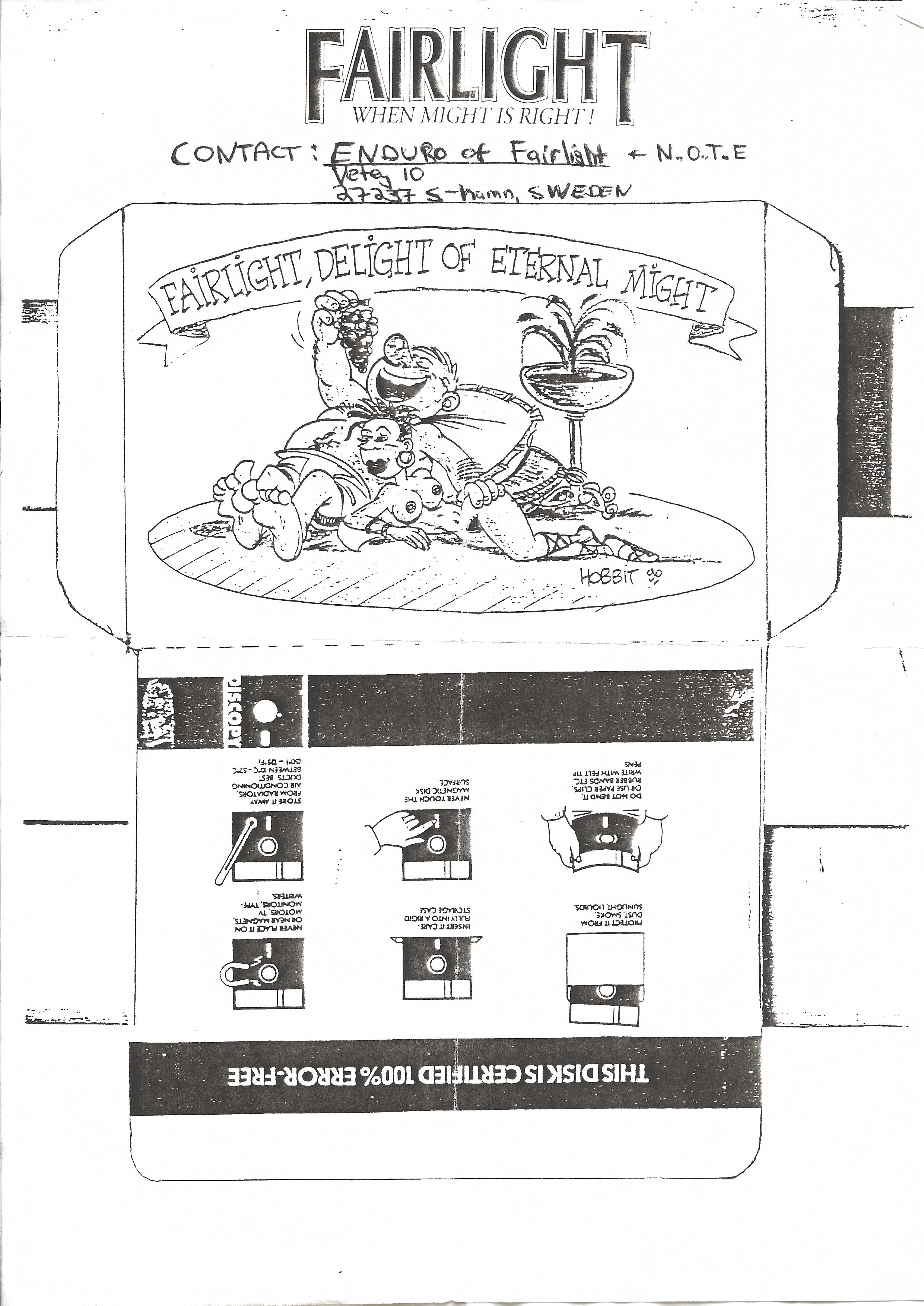
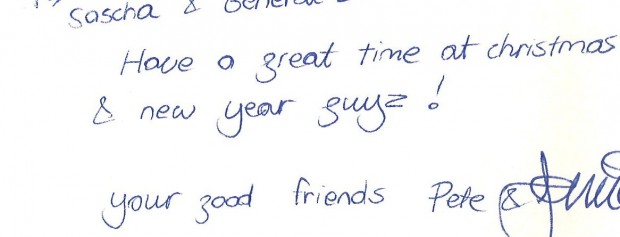
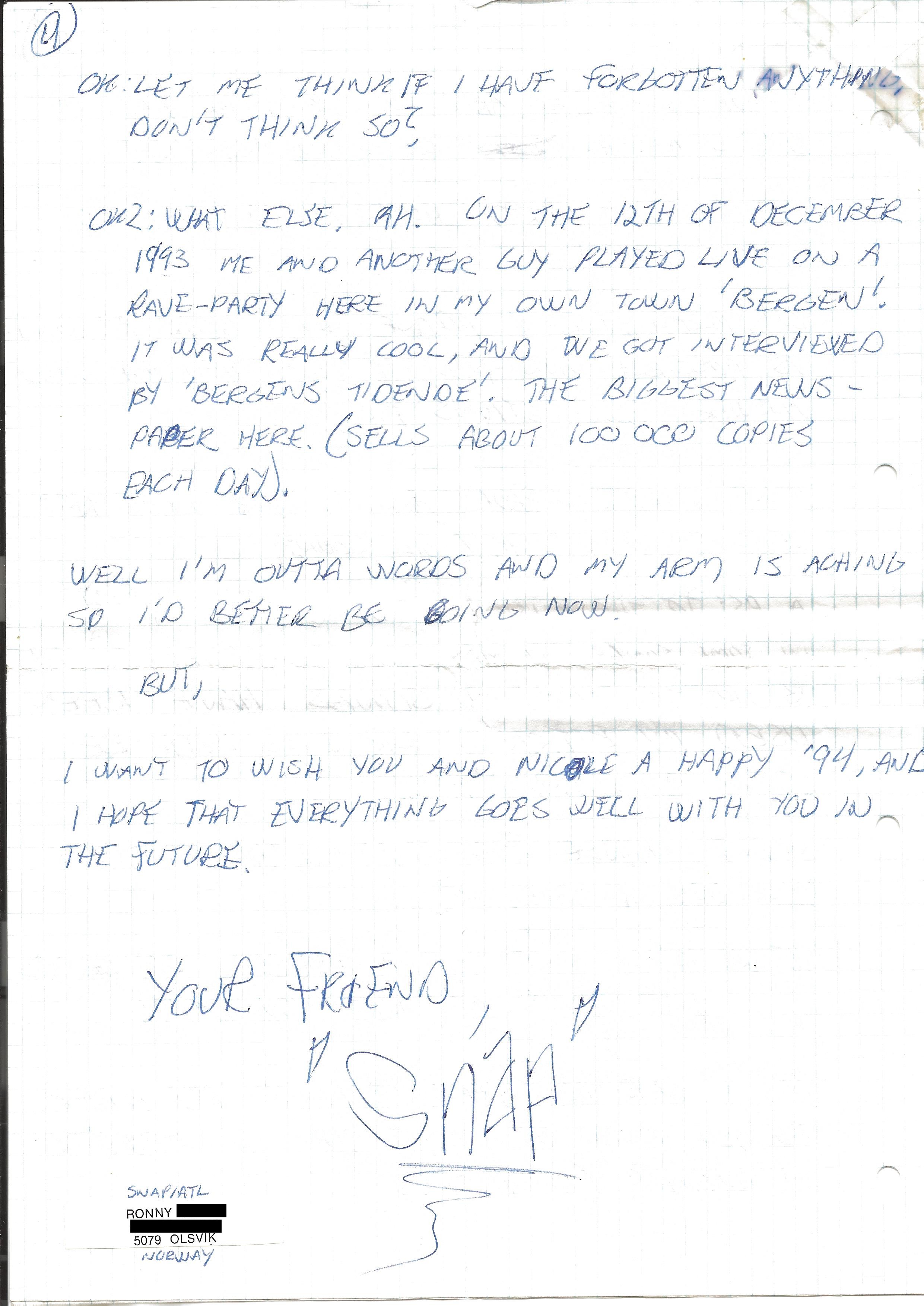
Today we give you some scans from the private collection of Dr. Science/Atlantis, a Swiss coder and cracker who was a member of the legendary Computer Freaks Association in the late 1980s and is still active in the C64 scene. Apart from some neat disk covers and CFA’s official greeting list, the probably most exciting part of this installment are the letters Dr. Science received from fellow sceners in the late 1980s and early 1990s. The letters are exemplary for the global networks built by the scene already back then – even this small sample includes correspondents from countries such as Australia, Finland, and Norway. Furthermore, the letter from Snap demonstrates how group members conducted collaborative work on demo productions before email and IRC. Expect more scans from Dr. Science’s collection in the near future!

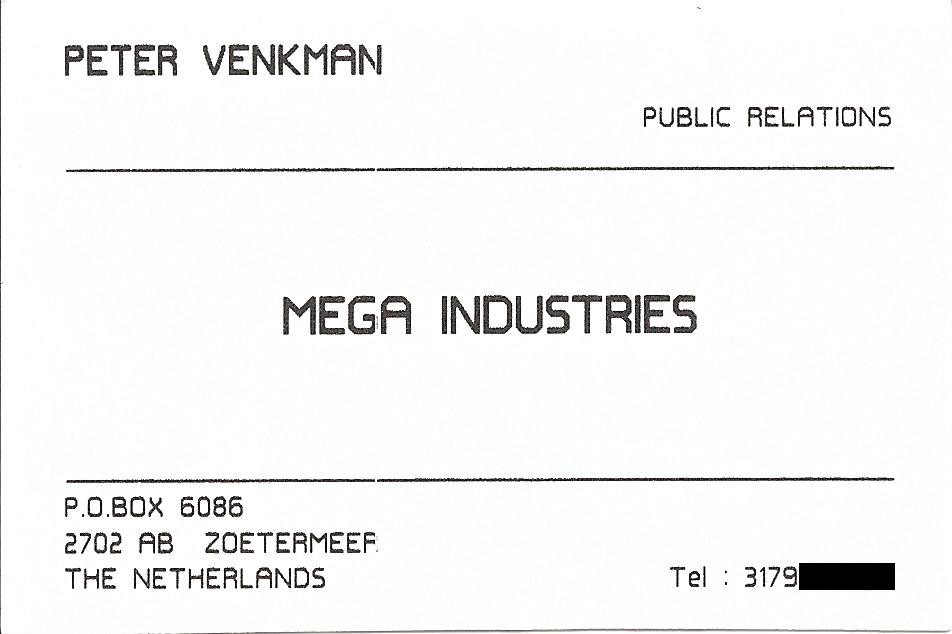
Peter Venkman/Mega Industries business card, early 1990s [metadata]
Fairlight disk cover by Hobbit, 1990 [metadata]
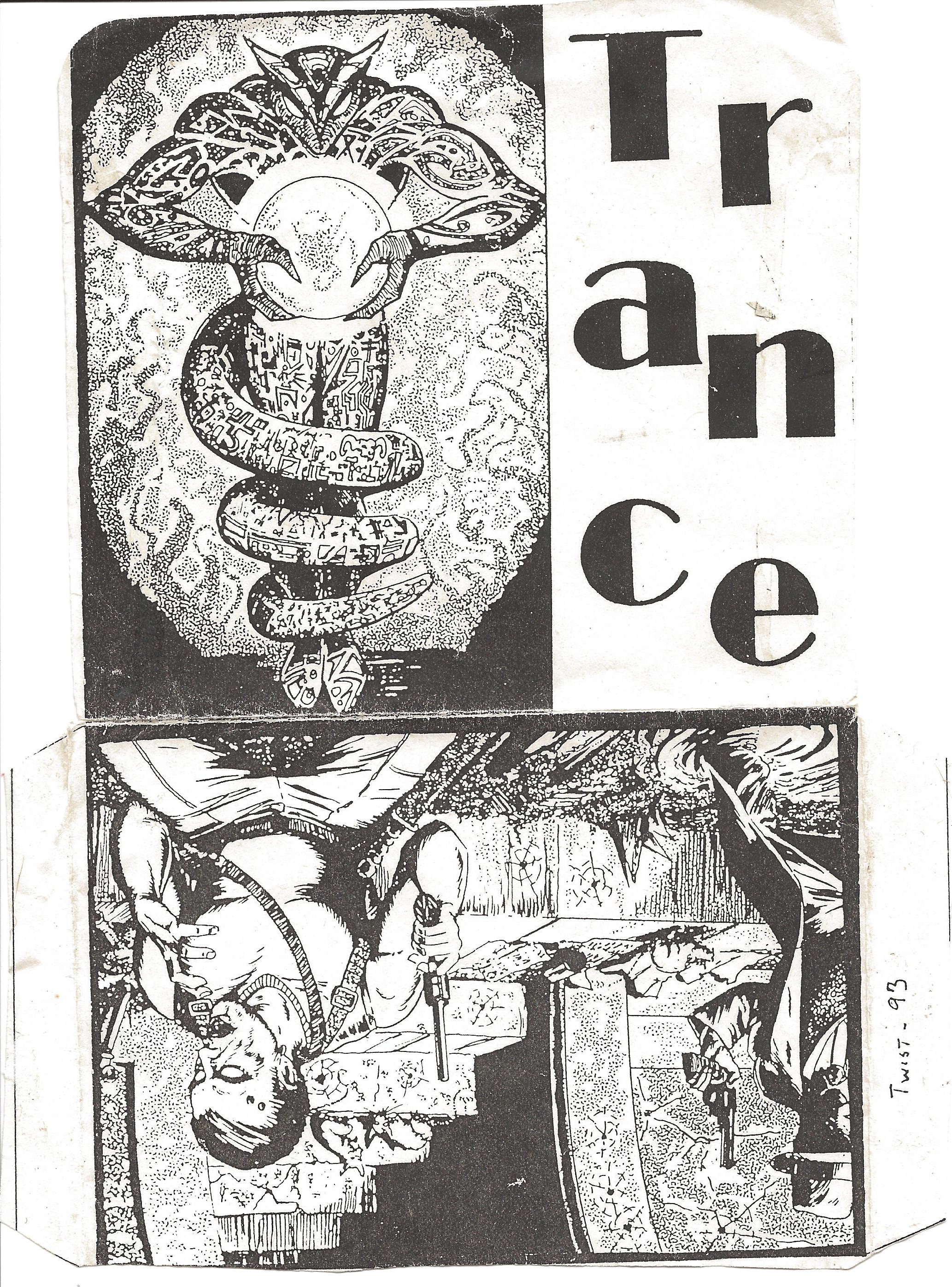
Trance disk cover by Twist, 1993 [metadata]
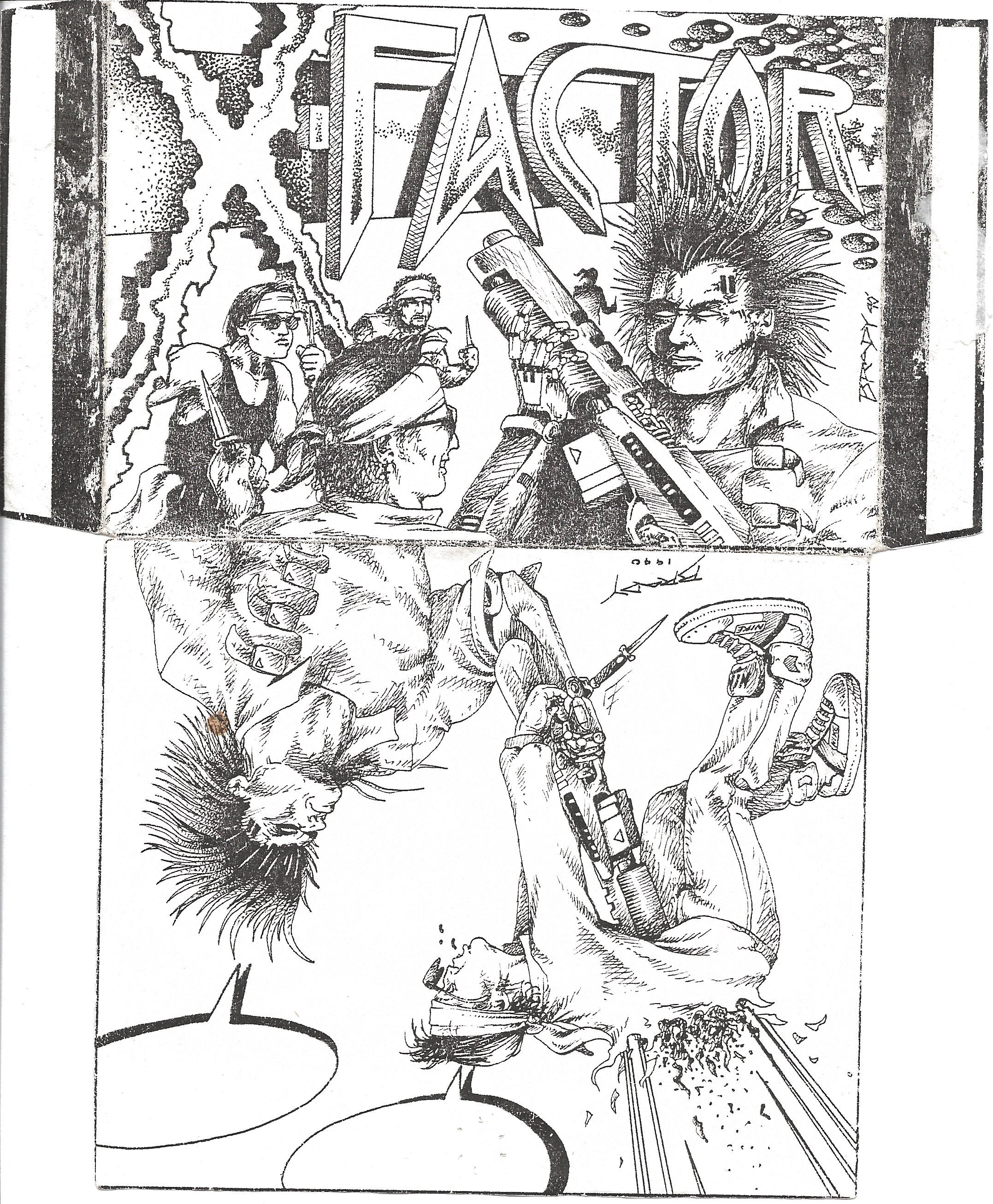
X-Factor disk cover by Brady, 1990 (unfolded scan) [metadata]
Computer Freaks Association greeting list, 1990 [metadata]

Letters:

• Agemixer to Dr. Science, 15 June 1995 [metadata]
• Boss to Dr. Science, 19 December 1989 [metadata]
• Cruze to Dr. Science, 19 February 1992 [metadata]
• Fake to Dr. Science, early 1990s [metadata]
• Snap to Dr. Science, December 1993 [metadata]

The PLK: A Crucial Communication Tool

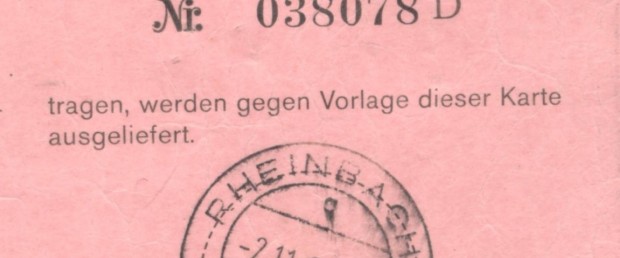
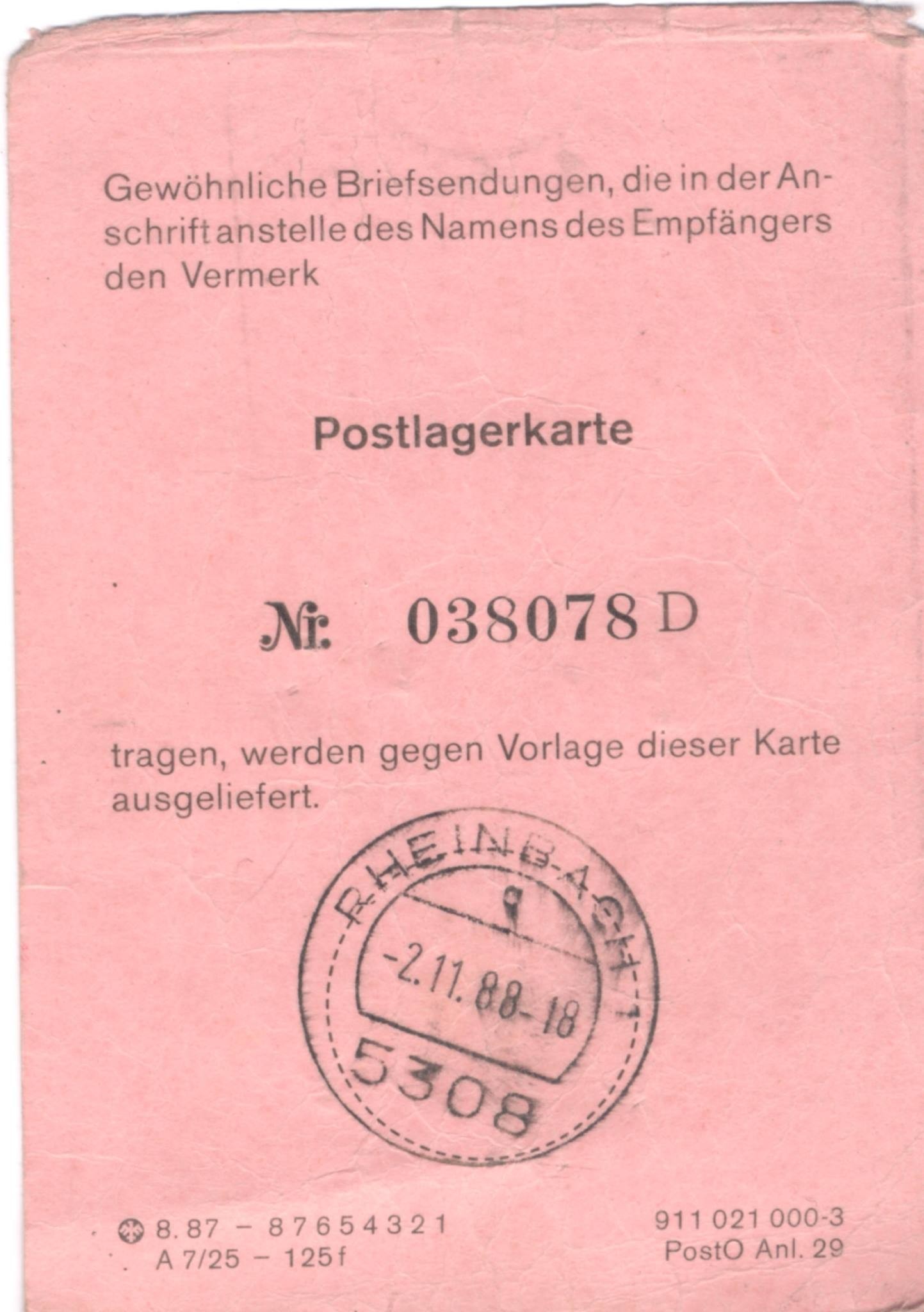
Bodo/Rabenauge provided us with this scan. It’s an inconspicuous pink paper slip, slightly bigger than a credit card. For German crackers and demosceners in the 1980s, however, it was the single most important tool for long-distance communication and data transfer, before the introduction of BBS‘s and a long time before the Internet.

PLK is short for “Postlagerkarte” and roughly translates as “Mail storage card”. Introduced by the German Imperial Post in 1910, it was a service that enabled customers to receive mail anonymously.1 The pink slip was the only ID you needed at the post office counter to pick up the mail sent to the particular PLK number. Also, unlike P.O. boxes (“Postfächer”), you could get a PLK for free and without having to reveal your identity.2 From the mid-1980s onwards, when German law enforcement began to take piracy more seriously, PLKs became the preferred software exchange channel for computer kids – and particularly for their “elite” segment, the crackers and swappers, who raised illicit software exchange to a semi-professional level. Going to the post office and picking up the latest disk-filled envelopes was part of the most active sceners’ daily routine. Some even went as far as having multiple PLKs across their hometown.3

Of course the German public, and particularly the law enforcement authorities, became aware of the scheme rather quickly. Already in 1984, some computer magazines stopped publishing classified ads with a PLK contact address, as it began to have an air of piracy and fraud around it.4 In 1986, the infamous copyright lawyer Günter von Gravenreuth described the PLK principle to a specialist audience.5 To cope with the PLKs’ anonymity, the authorities had to go to great lengths. After finding out which post office a particular PLK was assigned to, the police had to place plain clothes officers at the post office and wait until someone showed up to collect their mail.6 1980s cracker magazines are full of reports about people getting “busted” in this manner. Jeff Smart, editor of the papermag ‘Illegal’, described the typical situation in 1988: “Normally you get a PLK […] without giving your name or address, so the cops have to wait in the post office until you appear and get your packages from the counter clerk. Then they politely ask you: ‘are you really in that group X.X.X. ???’ and GA-BOSH! Game over for you!“.7 Such confrontations at the post office, which sometimes escalated into spectacular chasing scenes, could also lead to a house search.8

Those who used PLKs for swapping resorted to different strategies to counter these measures. After the dangers of picking up PLK mail became common knowledge, sceners went to the post office in groups: “One of us took a peek, and if the situation seemed safe, he beckoned the rest of us.”9 Those operating on a more professional level resorted to hiring younger kids who would pick up their mail for pocket money. These, ideally, did not even own home computers, and thus were perfectly “clean” when apprehended by the police.10 Other groups began leasing P.O. boxes in neighbouring countries with a more lax attitude towards piracy, such as Belgium or Luxembourg, and periodically drove over the border to pick up their packages.11

All in all, PLKs quickly turned out to be anything but the universal remedy for those involved in software swapping. However, they were still widely used – most importantly because they allowed the hiding of real names and addresses not only from the police, but also from other sceners. Thus, PLKs also became the preferred method of data exchange for demosceners – some of whom even wrote to commercial computer magazines arguing that having a PLK did not always imply criminal intent.12 The notion of a PLK as a synonym for a contact address within the scene became so popular that even in a Yugoslavian crack intro, the group introduced their contact details (an ordinary street address) as “our PLK”.13 Thus, the concept of a PLK gained international cultural significance within early home computer culture even beyond its original meaning.

The German Post abolished the PLK system on 1 June 1991. The scene did not shed many tears over it – after all, much of the data exchange was already relocated onto BBSs. However, a significant cultural practice disappeared, to be forgotten by all except by those who experienced it themselves.

Gleb J. Albert

Got a personal PLK story to tell, and want to share it with our readers? Please do get in contact!

PS: The scan of Bodo’s PLK is available here.
Ukrainian Demoscene Swap Letters from the 1990s

This time, we have something really special – not flyers, magazines and other replicated materials, but private letters from scener to scener, exchanged while swapping disks. This is something very familiar to those readers who were part of the scene in the 1980s, but something that members of younger generations hardly ever got to see. Here, however, the platform and location of the authors is rather unusual: The letters are written by Ukrainian ZX Spectrum sceners in the 1990s. While the Internet was a luxury in the post-Soviet countries, mailswapping was the usual way of interregional software exchange – and, obviously, it was not just enough to pack a disk into an envelope. Spectrum users exchanged personal letters, photographs, funny collages… This is where news and gossip was spread, long-distance friendships were forged, and new demo productions took shape. The small stack of letters presented here today was originally posted by VBI on his blog, and he was so kind as to provide us with higher resolution scans for permanent archiving. Thanks to him, we now have a unique insight into an early post-Soviet home computer culture.
As a new feature, we now have a built-in gallery at the bottom of the post, so you can browse the pictures quickly. There, you can also see the detailed metadata for the scans – they include summaries of the letters (which are, of course, written in Russian with bits of Ukrainian in between). To download the hi-res scans, however, click on the single links below pointing to our archiving space at scene.org.
• Rob F. to VBI, early 1999 [link]
• Consul to VBI, 19 September 1997 [link]
• Epson to VBI, 29 September 1997 [link]
• Injector to VBI, 25 August 1997 [link]
• Viator to VBI, 28 November 1996 [link]
• Viator to VBI, 19 December 1997 [link]